
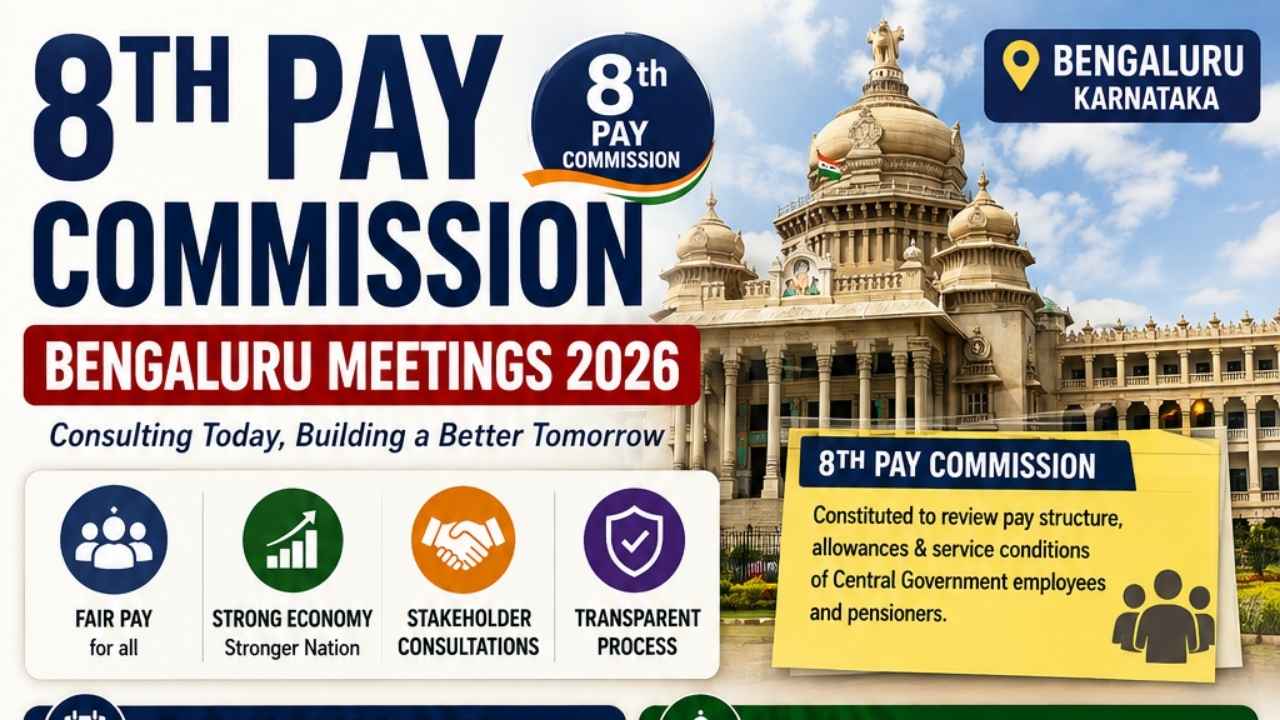
The 8th Central Pay Commission is continuing its consultation process with employees, pensioners, associations and other stakeholders. As part of this exercise, the Commission is scheduled to hold meetings in Bengaluru on October 7 and 8, 2026.
These consultations are important because employee and pensioner organisations can present their concerns, demands and suggestions directly before the Commission. However, the meetings should not be viewed as a confirmation of any particular salary hike or fitment factor.
When will the 8th Pay Commission meet in Bengaluru?
The Bengaluru consultation meetings are scheduled for October 7 and 8, 2026.
The meetings form part of the Commission’s wider consultation programme, under which it is interacting with different stakeholder groups across the country.
Organisations that want to meet the Commission need to complete the required appointment process within the specified deadline.
What is the last date to request a meeting?
Stakeholders seeking an appointment for the Bengaluru meetings need to submit their request by September 18, 2026.
Applicants should keep the Unique Memo ID generated during the memorandum submission process available while making the appointment request.

Submitting the request after the deadline could mean that the organisation is not considered for the Bengaluru interaction.
Who can participate?
The Bengaluru consultation is mainly relevant to organised stakeholder groups connected with Central Government employees and pensioners.
These may include:
- Employee associations
- Trade unions
- Pensioner organisations
- Service organisations
- Other eligible stakeholder groups
Individual employees should not assume that registration automatically guarantees a personal meeting with the Commission.
The consultation process has separate mechanisms through which individuals can submit their views and memoranda.
What is the purpose of the Bengaluru meetings?
The Commission is collecting feedback before preparing its recommendations to the government.

Stakeholders can raise issues concerning:
- Basic pay
- Pay structure
- Allowances
- Pension
- Retirement benefits
- Service conditions
- Other employment-related matters
Employee and pensioner organisations can also explain the financial and practical impact of their demands and provide supporting information.
Does the Bengaluru meeting confirm a salary hike?
No.
Participation in the consultation does not mean that a particular demand will be accepted by the Commission.
Similarly, the Bengaluru meeting does not confirm a specific fitment factor, minimum salary, pension increase or allowance revision.
The Commission will consider representations from various stakeholders along with other available information before making its recommendations.

What should organisations prepare?
Organisations planning to participate should prepare their memorandum and supporting information carefully.
Useful material may include:
- Existing pay structure
- Proposed pay revisions
- Allowance-related demands
- Pension-related concerns
- Comparative salary information
- Financial calculations
- Relevant service rules
- Supporting documents
A clearly structured representation can make it easier for the Commission to understand the organisation’s concerns.
What is the Unique Memo ID?
The Unique Memo ID is generated through the prescribed memorandum submission process.
Organisations seeking a meeting should retain this identification number because it is required as part of the appointment process for the Bengaluru consultation.
Those planning to participate should therefore complete their memorandum submission before attempting to request an appointment.

Will pensioners also be represented?
Yes. Pension-related matters are part of the broader consultation process.
Pensioner organisations can use the consultation opportunity to present concerns involving pension revision, retirement benefits and other matters relevant to retired Central Government employees.
However, the final recommendations will be determined by the Commission after considering representations from different groups.
What happens after the Bengaluru meetings?
The Bengaluru meetings are only one stage of the larger 8th Pay Commission consultation exercise.
The Commission is expected to continue gathering views from different parts of the country and from different categories of stakeholders.
After completing its examination and consultations, the Commission will prepare its recommendations for the Central Government.

The final outcome will depend on the Commission’s recommendations and the government’s subsequent decisions.
8th Pay Commission Bengaluru meetings: Important dates
| Particular | Details |
|---|---|
| Bengaluru meetings | October 7 and 8, 2026 |
| Last date for appointment request | September 18, 2026 |
| Main participants | Employee and pensioner organisations and other eligible stakeholders |
| Important requirement | Unique Memo ID |
| Venue details | As communicated by the Commission |
| Purpose | Consultation and submission of stakeholder views |
What employees should understand
The Bengaluru meetings provide an opportunity for organised employee and pensioner groups to place their demands before the 8th Pay Commission.
But employees should be careful about information circulating online regarding a confirmed fitment factor or guaranteed salary increase. Until the Commission submits its recommendations and the government takes a decision, figures circulating as final should not be treated as official.
For employees and pensioners, the most important step at this stage is to follow official notifications and understand the consultation process rather than relying on unverified claims.
Disclaimer: This article is for informational purposes only. The consultation schedule does not constitute confirmation of any particular salary increase, fitment factor, pension revision or allowance. Final changes will depend on the recommendations of the 8th Central Pay Commission and subsequent government decisions.